Showing posts with label autumn. Show all posts

Monday, November 10, 2014

Pinhoti 100 Race Report: The "Perfect" Race

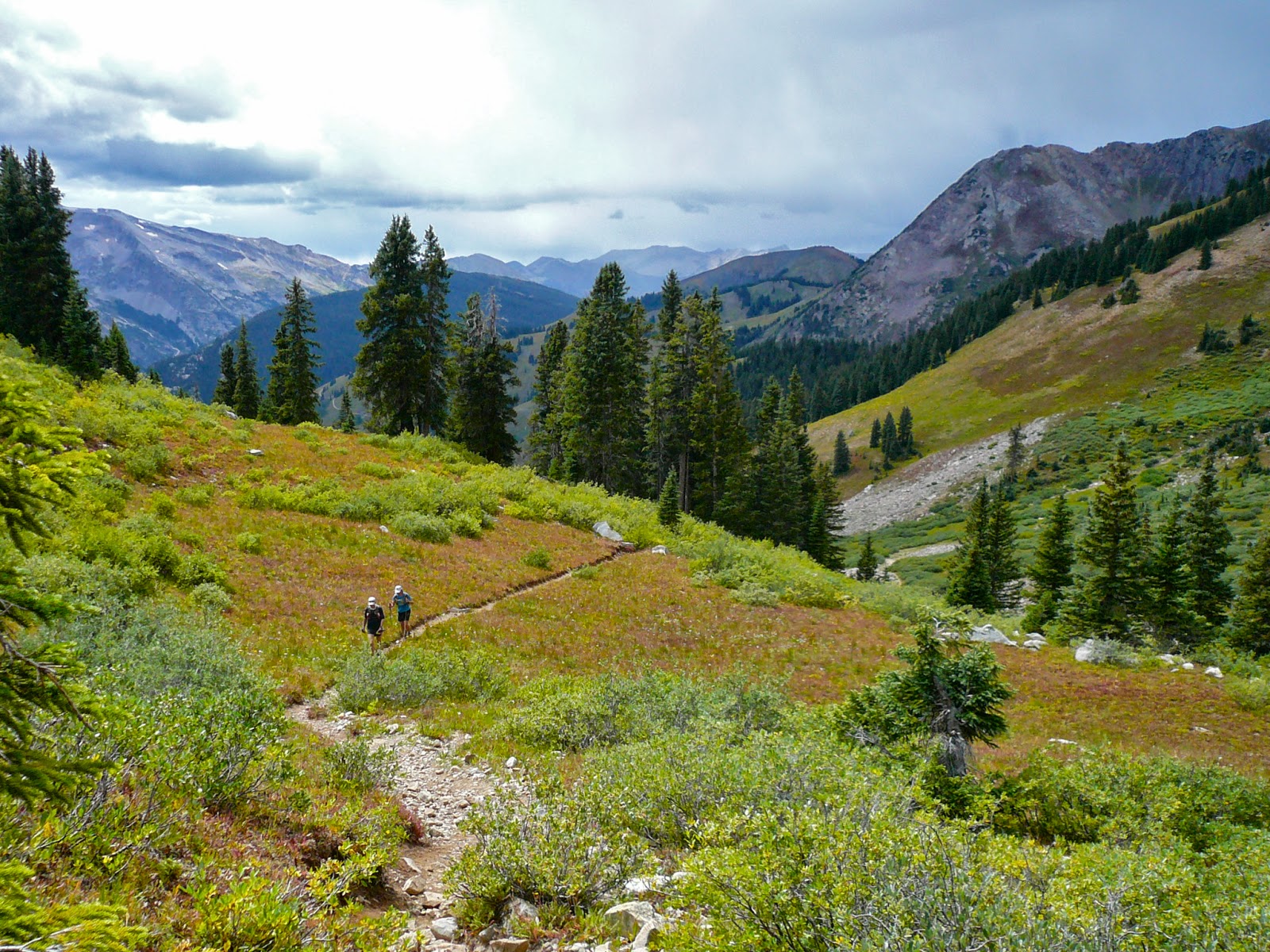
Peak bagging in Alabama! Thanks to fellow runner and five-time Pinhoti 100 finisher Perry Sebastian for snapping this photo of me around mile 40.
Last weekend, I re-learned a lesson I've already been taught many, many times, but somehow keep forgetting: the key to satisfaction is low expectations.

And, in the case of running 100 miles, also: patience, humility, and a sense of humor.


When I first signed up for Pinhoti in Alabama's Talladega National Forest, still in the wake of my slight-disappointment over how the Bear 100 went at the end of September, it was with a plan: rest completely for one week, train hard again for three weeks (favoring intensity over volume, so lots of speedwork, hill repeats and strength training), taper one week, then crush Pinhoti.

Instead, here's what happened during those five weeks: a couple yoga classes, an 8-mile hike, a few 45ish-minute easy runs and a 12-mile long run. No speedwork, no hill repeats, no strength training. In the seven days leading up to the race, I ran zero miles.

Truth be told, I just felt over it. I signed up quietly for Pinhoti within hours of publishing my Bear 100 race report, felt excited about running another 100-miler for approximately two days, and then regret sunk in. I felt like I just really didn't care anymore. I'd trained hard all year, I was tired, I felt ready to focus my energy on other pursuits for the rest of the year.

It's not an inspiring message, but it's genuinely how I felt. When Pinhoti race weekend rolled around, I no longer harbored any expectations of "crushing" it. I chose, instead, to define my goal not necessarily as nailing a perfect race, but as just what I articulated on my blog last month: "to just not fall apart ... to run hard and feel (mostly) good the whole time, or as (mostly) good as it's possible to feel during a 100-mile race." 

Because I had no crew or pacer, I wasn't worried about projecting my times or hitting any targets, other than staying ahead of the race cut-offs. I admit to not even really looking at the course profile before the race.

When the race began at dawn in a 32-degree chill on Saturday morning, I took it easy. I hung out in the back of the pack, didn't get frustrated when I got stuck in a slow conga line on singletrack for the first few miles, just relaxed and reminded myself to run slow, slow, slow.

What the Pinhoti Trail looks like on Instagram. But seriously. It's this beautiful. (I cross-posted this image to the Trail Runner Instagram page.)
As the sun came peeking through the trees, we runners spread out enough that I got into a groove. The first 40 miles of Pinhoti are smooth, runnable singletrack without any of the significant, gut-busting climbs that make up the trails on which I train at home. Not that it's flat, by any definition. Just steadily rolling, with one big push up to the top of Mount Cheaha, Alabama's highest point at 2,411 feet, around mile 40.

Several notable things about Pinhoti that set it apart from most other 100s I've run, volunteered, paced and/or crewed at (which include: IMTUF, Leadville, the Bear, Pine to Palm, Cascade Crest, Badger Mountain, Pigtails and Hardrock): 

1. The leaves.
The singletrack is lovely and carpeted with fallen leaves this time of year. I was very grateful for the toe bumpers on my shoes, which saved my feet from many a bump and bruise. I tripped over hidden rocks and roots at least a few dozen times, but only face-planted onto the ground once, after stepping on what I like to call a "leaf cornice" on the edge of a particularly narrow strip of singletrack cut into the side of a steep slope. I thought there was solid ground underneath the leaves on which I stepped; alas, there was not, and down I went. No serious injuries, though.

2. The number (and quality!) of aid stations.
Pinhoti has 18 aid stations, far more than most 100-milersand this is both a blessing and a curse. A blessing, because the aid stations are unbelievably amazingliberally packed with not only the usual ultra trappings, but all sorts of goodies like doughnuts, bacon, sausage, pickles, homemade cookies, Nutella wraps, fresh vegetables and hummus, whiskeybut a curse because it's easy to lose time hanging out. Because I had no crew, though, and know virtually no one in the state of Alabama (save for Ms. Brandi Garcia, whose smiling face greeted me and brightened my day at many an aid station!), I never sat down and rarely spent more than about 60 seconds at any aid station, except to swap out my shoes at mile 55, which kept me at that aid station for maybe five minutes.

3. The runnability.
Since I often train at altitudes two miles above sea level, my lungs felt like a million bucks the whole race. i.e. Colorado people should be given a serious time handicap at sea-level races, because breathing that much air felt like cheating. My legs, on the other hand, had literally never done that much concentrated running everI've averaged 40-mile training weeks all summer long, and even the majority of those training miles are hiking, not really much "running," per seso by the end of Pinhoti, my legs were definitely worked. But all that running felt damn good, too. So much gorgeous singletrack.

4. The long, long night. 
After the sun went down in blazing, red glory, we didn't see it again for a long time.
It got dark on me somewhere around mile 45ish for me, and by the time it was light again, my race was nearly over. Because Pinhoti occurred later in the year than any other 100 I've run, the daylight hours were much shorterand because I ran this one much faster than any other 100, despite its benevolent 7 a.m. start time, I finished quite early the following morning, by comparison. I love night running, but I've also always greatly looked forward to sunrise on the second morning of hundos, because it's such a natural energy boost and mood lifterso sometimes it was hard to spend such a long night out there alone, knowing that sunrise was still so many hours away, and that I'd spend almost the whole second half of the race running in the dark.

5. Bottom line: If anyone ever wants to try a pacerless/crewless race, this is the race to do it at! 
People in Alabama are nice. Here's me chatting up a storm with folks at an aid station, while simultaneously shoving copious amounts of snacks into my face.
It's also just a great beginner hundo. Beautiful fall weather all seven years it's been held (no capricious high-alpine storms to contend with), plenty of drop-bag opportunities (I used four drop bags in total), and amazing volunteers and aid-station support. I carried a small pack, mostly for extra clothing layers and some snacks, and one handheld bottle; I rarely drank more than its 20 ounces' worth of water between aid stations, so it's really possible to do this one with minimal supplies.

6. With that said, for those planning to run this in the future and trying to figure out what to pack, here was my complete gear supply list, keeping in mind that forecast was for 30 to 60 degrees, high wind but no chance of rain. My base running costume was just shorts and a PEP merino wool T-shirt (short-sleeve version of this one), but I also had with me at all times (sometimes wearing, sometimes stowed): a long-sleeve wool shirt, a lightweight windproof jacket, full-length tights, a Buff, earwarmer headband, and lightweight fleece gloves. I also carried with me the whole race my Suunto Ambit 2 (which utterly failed, dying less than 10 hours into the race after a full battery charge; strange, because it lasted all 31+ hours at the Bear on the same settings), point-and-shoot camera, Black Diamond Icon headlamp (it's heavy, but so worth the extra ounces to not struggle to see the trail at night), just-in-case spare headlamp, a bunch of spare batteries, a couple Band-Aids, a mini tub of Vaseline, and ample snacks such as squeezable packets of pureed baby-food, bars (I favor nut-based ones like KIND and Clif Mojo), dried fruit leathers, a few Vespa packets and Endurolyte sodium tabs that I took sporadically (probably 10 during the whole race).

Here are a few photos I took with my camera during the race that really capture the beauty of Alabama's trails and all the sunlight filtering through autumn foliage:


I did have some early twinges of paina dull, inexplicable ache in my right knee that started around 35 miles, and persisted until mile 50ish when it was overshadowed by a sore left Achilles for the next 5 miles or sobut I have been through enough of these things by now to know those small pains almost always pass if you are patient with them. I don't take Ibuprofen or anything like that during races, so my only defense against pain was really my own patience. So, to my mind, I'm ever grateful; the rest of my race was fairly pain free.

All smiles (almost) all the way! Photo by Brandi Garcia.
Frankly, all I tried to do was have fun. I talked a lot with fellow runners, I smiled and laughed at every available opportunity, I joked around with all the aid-station volunteers—my favorites were the women at Hubbard Creek, mile 52ish, who were tickled pink when I saw the plate of raw broccoli stalks and hummus they'd set out on their aid-station table. I exclaimed, "BROCCOLI?! I LOVE BROCCOLI!" and dug in, and they got excited, because I was the first runner to pass through who'd been stoked on the broccoli.

A mile later into the woods, as I passed another runner and his pacer, they called out after me to say they wished they could run that confidently at night. Then one of them said, "Hey, wait a minute, that's Broccoli Girl! Damn, I should have some broccoli, too, if it makes you run like that." The other said, "I just ate a bunch of bacon there, instead of the broccoli. The bacon's holding me back!" I yelled over my shoulder that I'd eaten plenty of bacon at the aid station, too, but also that yes, broccoli is awesome.

I'd had this suspicion before, that running a race sans pacer or crew would force me to stay more positive overall, to maintain my joy and my humor, and above all, to stay strong mentally rather than relying on someone else to do that for me. Steve was a wonderful pacer for me at my first two 100s, but I found myself using his presence as an excuse to complain about everything that was bothering me, to garner his sympathy, to cry on his shoulder. He was kind and reassuring and coached me through my low moments, but the point is, when you're running alone, you can't let yourself fall apart in the same way. If you want to finish, it's simply not an option.

And so, there was no falling apart this time. Not to say I didn't come close a couple times, though.

Just before the sun came up, I was beginning to get tired and loopy. I kept saying (yes, aloud) to myself, "Stay focused; you cannot lose your shit now." Despite my best warnings to myself, I was seriously loopy, so somehow managed to accidentally leave my gloves and handheld bottle in the middle of the woods after a quick break around mile 82. I just plum forgot to pick them back up when I started running, and didn't realize it until over a mile later.

To my horror, I thought I'd also dropped my rental car keys somewhere in the woods, because I couldn't find them anywhere in my pack—so I spent several miles alternately berating myself for being such a careless idiot, then telling myself to calm down, because as Scott Jurek once wrote (forever one of my favorite quotes about ultrarunning), "The ultra distance leaves you alone with your thoughts to an excruciating extent. Whatever song you have in your head better be a good one. Whatever story you are telling yourself had better be a story about going on. There is no room for negativity.  The reason most people quit has nothing to do with their body.” But even this, I managed to push onto my mind's backburner, focusing instead on the beautiful scenery and gratitude toward my body for being capable of this sort of thing. (Fortunately, after finishing, I found my car keys buried deep inside my pack.)

If I can take away just an ounce of the meditative calm and wisdom I somehow find during ultras and apply it to the rest of my life, I'll be a lucky little lady indeed.

By mile 85, I was still feeling fantastic. I could smell the barn, too, so I kicked things into high gear. I had a blast running hard for about seven miles before my body decided that was enough, and it was done. Oops. Thus, the final eight miles were quite a bit slower going, mostly walking. A good deal of those miles are on paved or gravel roads, so in theory, though, if one were to save anything in their legs for the home stretch, there's ample opportunity to run 'er in.

Morning frost on the relatively flat final miles of the Pinhoti 100 course.
I crossed the line in 25:57—a pleasantly surprising "PR" for me by a full three-and-a-half hours, but far more importantly, the most joyful and least emotionally wrecked I've ever felt at the finish line of a hundo. Pursuit-of-the-"perfect"-100 mission accomplished! I'm now content to retire from my 2014 running season and turn myself over to the gods of winter for a season of snowboarding, cross-country skiing, Swiss Bobbing and other non-running adventures!

Not a homeless person: Just a tuckered out ultrarunner. It's not the first time someone with a camera has taken a post-race snap of me. Thanks, Brandi! :)
Big thanks, as always, to everyone who supported me from afar at this race—Steve, my parents, my friends, my coworkers, my comrades in the ultra community, my Colorado running buddies Annie, Jeason, Elinor, Julie, and Jen—as well as all the spectacular folks I met or hung out with in person in Alabama last weekend, including my wonderful host Marnie, fellow runners Vanessa (three-time Pinhoti finisher) and Donna (first-time 100-mile runner and finisher), Brandi, Perry, Rich, all the volunteers (especially the purveyors of broccoli at Hubbard!), RD Todd Henderson, and the many more good folks I chatted with but whose names I didn't learn. Y'all are awesome!

Wednesday, October 1, 2014

The Dark Places We Visit in Pursuit of the "Perfect" Race

Last year, at Trail Runner's first annual Photo Camp, I had a terrific conversation with Jason Schlarb and Jen Benna, two elite ultrarunners who'd come to run and "model" for the camp. Over beers and a post-run hot-tub soak, we all chatted about the dreamy pursuit of "the perfect race," that magical experience in which the stars align and everything unfolds like a dream.

Jen had experienced just that earlier that year at the Zion 100, which she ran many hours faster than any previous hundo she'd done, handily won by over an hour, and smashed the previous women's course record by nearly four hours. A month after our Photo Camp, Schlarb also set his own 100-mile personal record and bagged a dominating win at the hyper-competitive Run Rabbit Run 100. He also not only won, but broke the course record, by well over an hour.

Well, I'm no elite athlete, but that doesn't mean I'm not competitive with myself and my own goals. Granted, I tend to favor realistic expectations over ambitious ones, and until the Bear 100 last weekend, I'd never approached a race of that magnitude with a true time goal, other than just to not quit and make it to the finish line.

But, I trained hard this year. For my third 100-miler, I felt ready to graduate from the "just finish" mindset to the "race a wee bit" mindset. So I set a goal of finishing in under 28 hours, which felt ambitious for me on the Bear course (22,000 feet of elevation gain), yes, but also plausible. Nevertheless, it's scary to admit goals like this aloud, because if things don't go as planned, it's nice to be able to cop out and say, "Oh, I didn't really care about my time anyway."

But, here's the problem: I did.

Or, perhaps more accurately, I cared about my goal of wanting to nail "the perfect race." Or even, less ambitiously, to just not fall apart. I wanted to run hard and feel (mostly) good the whole time, or as (mostly) good as it's possible to feel during a 100-mile race.

And I felt pretty darn good for most of the race! Photo by Annie Murphy.
I wanted to be able to look back on the 2014 Bear 100 and say something other than "Everything was great until the sh*t hit the fan between the miles of 70 and 75," which has been the story of the other two 100s I've run.

In hundo #1 (2012 IMTUF), around mile 70ish, massive blisters bloomed on every available surface area of each of my toes. I went from being briefly in the women's lead to spending 25 miles wincing in pain with each step and missing the race's already-generous cutoff of 36 hours by three minutes.

In hundo #2 (2013 Leadville), I got exactly 1.5 hours of sleep the night before the race and thus, by mile 70ish, was literally falling asleep while running/hiking. I stopped to nap on the ground or on aid-station cots many times over the last 25 miles and, like a zombie, crawled over the finish line in 29.5 hours.

Last weekend, I was careful to sidestep the issues of #1 and #2wearing toe socks (no blisters the whole race!) and getting plenty of sleep (didn't even need caffeine to get me through the night this time!). I felt great.

Feeling psyched around mile 20. Photo by Annie Murphy.
Nonetheless, come mile 70ish, something vicious found a way to rear its head. In this case, around 5 a.m., the skies unleashed a holy terror of freezing rain. The final quarter of the course turned into a muddy slip-and-slide, an outright waterfall in places, that slowed me to a necessary walkwhich, in turn, chilled me to the bone.

Stubbornly, I'd wanted to run the Bear without a pacer. And I did just that, which, for the most part, I enjoyed. I can't tell you what exactly I thought about during my long, lonesome hours through the night, but I can tell you that I felt calm and joyful. There's magic to be found in solitude in the mountains. Furthermore, people are far more likely to approach and start a conversation with you when you're aloneso, all day and all night, I enjoyed sharing a few miles at a time and great conversations with strangers.

I crossed the state line around 4:30 a.m.

... and utterly failed to take a selfie with the sign. But posting this blurry photo to show how happy I clearly still was at that point in the race!
But, come the apocalyptic rains, my solitude took me to an especially dark place. I grew cold. I slipped several times, falling and hitting my head against the ground. All the moisture from the rain caused significant chafing on my back and thighs, rubbing my skin raw and bleeding in places. I cried some. I distinctly remember repeating the words, "I've never been this miserable in my life" inside my mind like the refrain to some terrible song. By the time I stumbled into the aid station at mile 85, every one of my layers of clothing and gloves and cap soaked through, I'd convinced myself I had hypothermia, so was fully prepared to quit and go home.

I wept there, too, disappointed in myself for giving upbut equally certain that I was, in fact, experiencing a medical emergency that warranted quitting. And yet, when I got there, my crewmy boyfriend and my dad, who also helped see me through Leadville last yearwas nowhere to be found.

I couldn't imagine doing anything but sitting, swaddled in blankets next to a campfire, so that's what I did. Nearly an hour passed as I sat, shivering and semi-conscious, before I overheard one of the volunteers mention that the road to the aid station was impassable for two-wheel-drive cars.

And so it dawned on me that my crew wasn't coming. There would be no piling into a dry, heated car and being gently lulled to sleep on the drive back to a warm hotel room. There was nothing but a 15-mile expanse of mud, rain and cold fog awaiting me. Impressionable as I was by then, thanks to the gentle but firm encouragement of a fellow runner and his pacer—thank you, Nate and Ben!back out I went.

Other than the mud on the trails, which only grew worse, everything improved from there on. The rains calmed. My body regained warmth as the coldness of night fell away and I was able to keep up a steadier pace. At the next aid station at mile 92, I happily fell into the arms of my crew, changed into dry clothes and took off for the finish line, thrilled to be "gettin' 'er done."

Cruising down the finishing chute, happily outfitted in dry clothes, shoes no longer identifiable under cloaks of mud.

Finisher swag.
Post-race portrait. Thanks for the snap, Jeason.
Am I satisfied with my race at the Bear this year? Of course I am. There's no being disappointed when you finish a 100-mile race! But that "perfect race," at least for me at the 100-mile distance, remains elusive. I've experienced it in a 50K; I've experienced it in a 50-miler. I'm just still hungry for it in a 100-miler. (It typically takes me only a few hours to go from "What the hell was I thinking, running 100 miles is the worst idea ever" to "When can I sign up for another one?")

Once again, this sport has thoroughly humbled me. Every time I get the teensiest bit of an ego about my running, something comes along to tear it down. And, for that, I have nothing but gratitude. Ego doesn't belong in the mountains.

Thanks for reminding me of that, Bear! Other than my own rambling, self-indulgent reflections here, I have nothing but good things to say about the race organization, beauty of the course, volunteers, aid stations, fellow runners ... truly a top-notch event I'd heartily recommend to anyone. Thank you to everyone who was a part of the 2014 Bear for making this an unbelievable experience! (And, for a far better photographic and video representation of the race's beauty and mudfest alike, check this out.)

Tuesday, September 9, 2014

Is ultrarunning—or any other great passion in life—sustainable?

Scenes from running Colorado's infamous Four Pass Loop last Sunday.
Fall is no doubt in the air here in Colorado. The aspen leaves are paler than ever after a summer basking in the sunshine, faded from their original deep green to a sort of lime-y yellow, well on their way to the fiery hues that bring “leaf peepers” from all over the world to Colorado in droves come late September. I’ve been waking up and seeing my breath in the air in the mornings, and nearby, the tops of our local 14ers in the Elk Range have already seen their first dusting of snow.

Frost up on the trails near Aspen early in the morning on Sunday.
I admit I’ve been dreading the end of summer. Don’t get me wrong; I adore fall—if only it weren’t followed by Old Man Winter. As previously mentioned, winter in the mountains has proven rough for me, since it invariably means the end of trail-running season here, and the beginning of a six-month stretch during which I must find other sources of the things that I typically glean from running in the mountains: endorphins, stress relief, meditation, a sense of community, empowerment, goals to strive toward, races to look forward to, excuses to eat lots of food.


Because I’ve been training for months for the Bear 100 (now less than three weeks away), like any good ultrarunner I’ve been geeking out on just about all forms of data and media about the race that I can find to consume ahead of time … race reports, spreadsheets of results, photo albums, and most recently, this documentary, ‘Dancing the Bear,’ which covers the 2004 Bear race.

Here’s what struck me about the film: many of the runners featured are no longer running ultras.

(Thanks to the fairly comprehensive resource, ultrasignup.com, it’s possible to, however creepily, track these things; please note that all my following observations are based on Ultrasignup results, not on rigorous, journalistic research; if I’ve made any erroneous conclusions here, please let me know.) The winner that year, Larry O'Neil, for whom it appears the 2004 Bear was his first 100, ran one more hundo in 2008, a couple shorter-distance ultras in 2010, then nothing since then. Chris Estrem, who took second that year, never ran another ultra again.

Of the two women the film followed—who both spend much of the film waxing poetic about their love for ultrarunning, discussing how essential the sport is to who they are—one never ran another ultra after that year. The other continued running ultras (though only one more 100) sporadically until 2010, then again, no more. Another runner the film featured, then-15-year-old Jimmy Wrublik, ran a few more ultras, but stopped after 2007.

There are, of course, plenty of ultrarunners who’ve been in this sport for decades—including three who also show up in ‘Dancing the Bear.’ The first: Betsy Kalmeyer, who started running ultras in 1988, won the Bear twice (including in 2004) and most recently, at the age of 53, took second at the 2014 Hardrock 100. The second is Errol "The Rocket" Jones, who's been running ultras for more than three decades and, at age 64, is still going strong. The third is Hans Dieter-Weisshaar, who ran his first 100 in 1999 and has since bagged more than 100 100-mile finishes, including, just last year, over the span of a few months, Hardrock, Leadville, Cascade Crest, Wasatch and the Bear—at the age of 73.

We champion these inspirational figures—and rightfully so!—as proof that ultrarunning can be a lifelong sport. After all, you don’t see too many football, soccer or basketball players still competing in their 50s, 60s and 70s.

And yet, sometimes I question whether ultrarunning—particularly 100-milers—is such a sustainable sport after all, at least for most of us. I understand this is relative blasphemy for me to utter, as I am myself extraordinarily passionate about the sport. I have dozens of ultrarunner friends older than I am, who’ve been doing this for many years already, and inspire me to no end—but indulge me for a moment here.

Having not spoken to any of the 2004 Bear runners featured in the film who are apparently no longer doing ultras, I can only speculate on what made them walk away from the sport. But, consider this: even for a low-mileage (relatively speaking) ultrarunner like myself, I typically spend 10-15 hours/week running on trails. I don’t have kids or many obligations outside of my job. Though many of my ultrarunner friends have young kids and seem to make it all work, I have a hard time imagining how I could ever, on a longterm basis, balance parenthood with ultrarunning and work and other priorities in my life, like being fully present in my relationship, having time for friends and family, getting enough sleep, eating well (by making food from scratch rather than relying on processed foods), writing, reading books, traveling, and keeping some modicum of organization and cleanliness to my living space. At some point, some aspect, somewhere, has to suffer.

Trail and ultrarunning, of course, has improved my life in a myriad of ways which I’ve already expounded on at length on my blog. Yet, as a still-starry-eyed relative newcomer to the sport (I’ve only been running ultras for a little over four years now, after all), I can’t help but notice that, for many, the actual shelf life of this sport seems to be about as many years as I’ve already invested in it.

Two things stuck out to me from my interviews last year with accomplished ultrarunners Jenn Shelton and Scott Jurek for an article in Trail Runner about the folks who appeared in the bestseller Born to Run. One: when I asked Jenn what she thought the future of ultrarunning was, she was very quick to tell me that she doesn't think it's a sustainable sport for most people. She was probably the first ultrarunner I ever heard express this out loud, since most of us like to talk about how of course ultrarunning is exploding in popularity and will continue to do so indefinitely because, duh, it’s the best sport in the world. But Jenn … Jenn just said, “It's hard to say anything without looking like a jerk, but I'm not sure it's meant to be a really popular sport. The time commitment to properly train is well beyond most people's lifestyle."

When I spoke with Scott, he spoke at length about the personal burnout he feels surrounding racing: “Do I get as much out of racing, to go after a time or a win anymore? I don’t know. It’s harder to have that ego now. I’ve enjoyed that pressure in the past, because it’s pushed me beyond boundaries, but at the same time, it gets harder as I’ve gone to the well so many times.”

This is probably what I find most compelling—the sheer time and mental energy we devote to plodding through the mountains for hours, sometimes days, on end. How deep are our reserves, and what do we do when they run out? How long can we find meaning and purpose in doing, essentially, the same thing over and over again? How long can we make running our highest (or almost highest) priority, at the necessary expense of other aspects of our lives? And, if we someday find we’ve lost some of our passion, how do we renegotiate whole identities that have been built upon a foundation of running?


Every run (as with all activities we choose to participate in) is, ultimately, a decision to not to do something else, whether that means relatively unproductive alternatives, as many drug-addicts-or-alcoholics-or-otherwise-turned-ultrarunners can attest to—or whether it means valuable ones, such as spending time with our families or (non-runner) friends.

My friend Jenn Hughes recently grappled with this very issue in a beautifully written, heart-wrenching blog post about running the Fat Dog 120 in Canada. At the start line, her 7-year-old son, Colin, protested to her: “You’re always leaving me.” Haunted by those words for all 120 miles until the finish, she writes, “I crossed rivers, ran through fields of heather, met new friends, and graciously accepted handmade food made from far flung aid stations … but it all felt like a game, a silly diversion … It was the most empty, neutral, underwhelming race finish I could have ever imagined, devoid of any excitement after all the pain I had just gone through. What exactly was the point?”

While poking around on Google for beta on the Bear 100, I also stumbled on the blog of Shawna Tompkins, who used to race up to a dozen ultras a year—and win most of them. I was surprised to learn she hasn’t (as far as I can tell, from Ultrasignup) raced any ultras since her second-place finish at the 2012 Bear. In the most recent entry on her blog, from August 2012, she writes about DNFing at both White River 50 and Cascade Crest 100 that summer, after having won the San Diego 100 in June: “I am not really sure what is going on, but my inner strength seems to be laying on the trail at San Diego or something …  I cannot figure out my thoughts!  Sure not good at this stuff.  Work hard, be tough, it all pays off.  What do you do with yourself if you don't feel like working hard?  Where does that satisfaction come from then?”

It’s hard for me to read things like this, because I’m currently so enamored with the idea of making a lifelong go of this and continuing to draw the joy and meaning from it that I currently do—but who can know? Maybe it’s not bound to be a lifelong sport for many of us, after all. Maybe it’s just something that grabs hold of us for a while, takes us for a wild ride, teaches us strength and resilience, connects us with a slew of amazing fellow humans, then lets us go again, scattering us back out into the world like dandelion seeds to apply to the rest of our lives everything we’ve learned on our sleep-deprived stumbles through the woods.

Or, maybe there's middle ground to be found. Perhaps the solution lies among the yellowing leaves fluttering to the ground outside my window right now. Last fall, my editor colleague at Rock and Ice, Jeff (who loves climbing more than anyone I know) mentioned that, much as he laments the end of rock-climbing season here, he embraces winter, too. It grants him the opportunity to turn inward and focus on other passions for a season—in his case, music and writing.


So, maybe winter in Colorado is just the universe stepping in to help protect me from running burnout—telling me to chill out, take a necessary breather for a few months, reallocate those 10-15 hours/week to other passions so that, come spring, I may return to the trails with a full and eager heart. Absence, after all, makes the heart grow fonder.

But, in the meantime ... I can't help but be anything but psyched for the Bear a few weeks from now.

Standing at the edge of Logan Canyon, home of the Bear 100, after a course-scouting training run last month.

Thursday, November 15, 2012

Reclaiming sea changes, endorphins, and my lunch breaks

Autumn has been my favorite season everywhere I've ever lived - the changing colors, the crisp air, the hearty seasonal foods, the excuses to wear hoodies and drink tea and curl up inside with a book. Perhaps above all, what I think makes me love it is its fleeting nature. The leaves are such fiery colors for such a short period of time, you can't help but be dazzled by their ephemera.

Glorious autumn hike in Salt Lake City last month
I haven't always been so fond of fleeting things like fall. (Metaphor alert!) I'm pretty sure I can pinpoint gaining my appreciation for transitional times to my blissful, liberating summer at Stanford. Following that, at 16 years old on the plane back to Kansas, just a few days shy of my reluctant return to high school, I wrote this in my journal:

I need to not be afraid of letting myself LIVE and fully experience the things and situations and people that bring me joy, no matter what the rest of the world has to say about it. If this summer has taught me anything, it is probably just more selfishness - life is way too short to let fear of risk bar you from truly living. It's too short for wallowing or complaining or ruminating or reliving the past. I am not going to waste another moment of my life complaining about "life in Kansas" - what a waste! 

Rachel wrote me a letter where she talked about wanting to put our angst aside and jointly make senior year our best ever - and reading that made me think, 'Hey yeah! That's within our power!' I want to have outrageously high expectations for this year, just like I did for this summer, because I do believe that many times in life, you get as much out of something as you put into it.

I am on my way home, leaving something behind perhaps, but I have too much to look forward to in the future to dwell on this particular ending. Life is full of endings, of final chapters, of goodbyes, and we cannot let ourselves dwell in them, or we will never appreciate the innate beauty of new beginnings. Even in giving up certain aspects of our pasts, we take with us (consciously or not) the things we have learned, the memories we have made, the experiences we have had, the emotions we have allowed to shape us. The doorways are open everywhere, just waiting.
A photo I took from the plane window as I was writing that journal entry
I think one of the great things about transitions, whether you're initiating them yourself or struggling to adjust as they're thrown your way, is that they offer the opportunity for radical transformations. What's more invigorating than giving yourself permission to be seven again, dream big, and believe anything is possible?

It's why I'm a sucker for New Years.

Those who know me know I'm also a sucker for the Space Needle :)
It's also why I often observe the new moon by burning a candle and writing in my journal about areas in my life I'd like to focus my energy on in the coming month. (Many thanks to my lovely friend and mentor in Ohio, Monique, for introducing me to this tradition.) And it's why, even when the world feels like it's spinning wildly out of my control, I think back to a fable my mom always told me when she'd remind me, "You never know if something is good news or bad news."

(Turns out, it's almost always good news.) On January 1, 2012, I wrote in my journal, May this year be filled with positive and necessary change! I guess I asked for it this year. As 2012 draws to a close, I've been reflecting a lot on the changes that have happened - and also on the ones I'm still working to initiate, on the coattails of larger transitions in my working life and personal life alike.

Life, as always, is a work in progress!

One of those changes is finding innovative ways to temper a busy, full-time work schedule with enough adventure to keep me sane. The last few weeks of October this year saw at my indolent worst. After IMTUF, I went for a grand total of three runs the entire rest of the month. Yikes! And I'm ashamed to report I've eaten lunch at my desk most days, rather than taking a moment for myself to go for a run or read a book or just sit still and breathe.

Jason, a friend of mine who came to work in marketing for REI after many years in a high-pressure, high-stress corporate environment, gave me this (paraphrased) advice before I started my new job: "Take your lunch breaks. Go for a run, or ride a bike, or work out. If you set that expectation on day one, people will just accept that you're the kind of person who goes running on her lunch break. If you wait too long before setting that routine, you're more likely to get stigmatized for trying to take a moment for yourself in the middle of the work day."

At the time he gave it to me, I felt convinced I'd follow his advice to a tee - but once I got started in my new role, I absolutely got wrapped up in the work-around-the-clock mindset. It's tough, when you're settling in to a new place; you don't want to be perceived as the slacker among a crop of hard-working folks. And I'm not! I'm a hard-working Midwestern girl; slacking is not in my nature. But here's the catch:

I am so much happier, calmer, and more productive when I get outside and get my endorphins regularly. So these past couple of weeks, I'm happy to report that I've made big efforts to re-prioritize that in my day-to-day life.
  • I signed up for a gym membership (with a lap pool!) in my office's building, so I can work out on my lunch breaks - and I found a lunchtime workout buddy in my coworker Rachel.
  • When the weather is decent, I'm biking the 26 miles roundtrip to work, instead of driving. (If I did this every day for a year, I would save over $4000 on tolls, gas, and wear/tear on my car!)
The scenery's not too shabby either
  • I'm reclaiming weekday sunrise summits on Mt. Si, before hitting the office. Always worth it.
7:30 a.m. this morning
  • Steve and I are doing a power vinyasa yoga class once a week (and biking to and from it!).
Life is good. I feel fortunate to be alive and healthy. I don't know what yet lies ahead, but I am optimistic. I've felt an awakening in my soul, and will conclude this rambling entry with my favorite quote, from Howard Thurman:

Don't ask yourself what the world needs. Ask yourself what makes you come alive and then go do that. Because what the world needs is people who have come alive.

Monday, October 22, 2012

Farming in Flannel, or Weekend WWOOFing

First and foremost, thanks to so many of you for the wonderful comments on my last blog entry. I've never had so much positive feedback on anything I've ever written. In many ways, getting to share my story with you all and receiving so many wonderful responses has pretty much been on par with the happiness I got from crossing that finish line :) So thank you, thank you, thank you. May we all continue to share our stories with one another - and be stronger, wiser, more joyful, and better connected because of it! 

(In the interest of sharing, here's one of my favorite inspiring reads of the past few years.)

Second of all: let's talk about how awesome Vashon Island is. Several months ago, I wrote about Vashon here on my blog and said this about it: A perfect little getaway from the city, Vashon boasts a lively community of folks, including many artists, musicians and, evidently, runners. It's always a treat to visit this rural, small-towny oasis.

The context in which I've visited Vashon (three times, prior to this weekend) has always been for the annual Vashon Ultra in June - my first 50K ever, back in 2010, and an event for which I feel a strong affinity and sense of loyalty. Every year, I've vowed that the next time I visit Vashon, I'd actually spend a decent amount of time there, seeing something other than the road from the ferry landing to the race start, and the 10-mile loop of trails that comprises the race.

This past weekend, I finally made the pilgrimage - with a weekend of work trades set up to structure the weekend. Steve, who's been interested in WWOOFing (World Wide Opportunities on Organic Farms - learn more here), coordinated with a small farm on the island to exchange a couple days of manual labor for a weekend of room and board. I had set up my own work exchange elsewhere on the island on Saturday (thank you, Claudine!) to trade writing/website assistance for an amazing massage/bodywork session - before meeting up with Steve at the farm for a little taste of WWOOFing.

So let me state for the record that I'd be a liar to say that I truly experienced WWOOFing this weekend. More or less, I pretty much just mooched off the labors of Steve. While I was off drinking tea with Claudine and getting a 5-star massage, this guy was hacking through blackberry bushes, shoveling (literally) horse shit and seaweed and grape leaves into compost bins, and assembling a large-scale rainwater-collection system.

I did show up in time to participate in the grand adventure of digging up potatoes. Quite the treasure hunt in the dirt! After much shoveling, we finally unearthed some good ones - which were promptly boiled, mashed, and set out on the dinner table.

Our kind hosts, Scott and Andrea, cooked up a storm for us on Saturday night. It felt like Thanksgiving - with foods that were almost entirely grown in their garden. Salads filled with homegrown sprouts, apples, spinach, cucumbers, tomatoes, and sunflower seeds - all harvested that day (or that week, at the very least). Mashed potatoes, mashed squash. Unbelievably tender pork from a locally raised pig. Berry cobbler for dessert, with fresh blackberries from their yard. Heaven? Pretty darn close.

Scott and Andrea are very focused on simple living - making and building things from scratch, repurposing everything, bartering whenever possible, spending less money rather than racing to make more. At the risk of over-romanticizing the island life, I will say that there was a stark contrast in the pace of their daily life from my own - even just the notion of having time to sit down together three times a day for a genuinely relaxed, home-cooked meal...that was nice. (Surely I can, at the very least, afford to reclaim the lunch breaks I've already begun to lose sight of in my new job? Starting tomorrow!)

The weekend's takeaway, for me, was similar to that of the delightful "Team Sprout", whom Seyeon and I stayed with during our first foray into couchsurfing years ago in Austin: time is money; money is time; live humbly, and you can experience a different kind of wealth entirely. 

Much like couchsurfing, this experience made me hope to someday have a home (and garden!) big, warm, and welcoming enough to host strangers. I love the idea of meeting travelers from all over the world, sharing fresh food and terrific home-cooked meals, learning about one another's habits and beliefs and life experiences. It's an amazing thing to be welcomed into the home of a perfect stranger, and be given a glimpse into their daily life.

In the morning, after a hearty breakfast with Scott and Andrea, we put on our work boots and hit the garden again for a couple hours. I'll be the first to admit: for as passionate as I am about food, I know astoundingly little about gardening/farming. It was awesome to see what broccoli looks like growing on a plant, before it's been harvested. I loved seeing how enormous the beets were in the dirt.
      

The stems of the Swiss chard were such a brilliant pink. 

The tomatoes in their greenhouse, of course, were ten times more flavorful than anything you can find in a grocery store. I wish small-scale food production was part of our educational system. Sigh.

They were kind enough to send us away with bags of fresh greens and vegetables, a big bouquet of hand-picked flowers, and a bottle of wine (which will be eligible for opening in 70 days...) from the Andrew Will winery where Scott works.

We spent the afternoon exploring Maury Island Marine Park (connected to Vashon), which was gorgeous - and even made us feel like we were on a real beach on the ocean, tidal waves and all! :)

Although this entry has been almost entirely focused on food, I've neglected to mention the two other ridiculously amazing dinners of the weekend. It would do my blog, and the meals themselves, a serious injustice to leave out mention of them entirely:

  1. Delicious dinner at the Preston household, featuring bacon/mushroom pizza, squash soup, blackened chicken in cream sauce, and creme brulee. My friends got fancy!
  2. Sunday shabu-shabu dinner at Deby's house: traditional Japanese hot pot meal with virtually endless bowls of rice, noodles, meat, shrimp, gyoza (dumplings), tofu, and vegetables...all followed by copious amounts of homemade mochi, filled with red bean paste. Yummy.

One thing is for sure: I died and went to food heaven this weekend. It was a bit of a rough transition back to Earth today...

A big thanks, as always, to everyone who made this weekend a stellar one. I shared so many wonderful meals with people I only just met this very weekend, or a few months ago, or in the case of a select few (Cam and Avey, this means you!), a full 3+ years ago now. All of you, in my relatively brief time thus far in this beautiful corner of the world, have become like family to me. I thank you for bringing color to my life!

Thursday, October 11, 2012

IMTUF 100 Race Report: Some Things Were Beautiful, Some Things Hurt

The strange dichotomy of my life continues! As I'm finally sitting down to write about the 36 harrowing hours I spent running through the rugged backcountry of Idaho last weekend, please note that this entry is brought to you from the luxury of a plush hotel room, complete with room service, in Salt Lake City, where I'm on business (and, soon, play) for the next few days.

In sharp contrast, last weekend, I was a filthy wreck of a human being, coated in dirt and sweat and Duct tape.

I suppose I need to start at the beginning - dinner with Deby after she finished the Pine to Palm 100 in Oregon three weeks ago. Deby is one of my badass-ultrarunner-mom-extraordinaire friends. She's run five 100s in the last couple of months, which is ridiculous, amazing, and thoroughly inspiring all in one. Though all my epic runs and pacing gigs this year have undoubtedly stoked my enthusiasm for knocking out my own 100, there was something in particular about seeing Deby's strength on the beautiful trails at Pine to Palm that really got into my pores.

So, despite the fact that I've said all year that I wouldn't try to run a 100 until 2013, there we were at dinner, and I was busy on my fancy phone researching potential 100s for the remainder of 2012. Sadly, though, there was not a one that really appealed to me. They all had issues: too far away from home, too flat, too many loops, too many leaves, already sold out. Grumble grumble; first world problems, I know.

So I dropped my pipe dream. For a week, at least. Then I took a look at the website for IMTUF (Idaho Mountain Trail Ultra Festival), the 100 that would be Deby's 5th this year. There were reasons to be cautious: the entire course is at significant elevation (5,000-8,000 feet). It would be an inaugural race, which could mean poor logistics or course markings. Then there were the race directors' ominous disclaimers: "It will be a loop course of uncompromising quality and difficulty through the Payette National Forest. You are highly encouraged to have a mountain 100 under your belt before you attempt this race." And: "This is the high Rockies and these giants make their own weather."

Shiver.

But no matter; I was already seduced. IMTUF boasted everything I wanted: tons of elevation, almost exclusively singletrack trails, a generous 36-hour cutoff, a hot springs at the start/finish line, sexy laser-engraved finishers' belts, and perhaps best of all - a race far away and mostly full of strangers, so I could sneak away and give it a try without hardly anyone in my life knowing. Deby and I were the only Washingtonians in it. Somehow, given the sheer impulsiveness of my decision, I really wanted the opportunity to run without the pressure of anyone in my life knowing what I was attempting. To be honest, mostly it was because I felt wildly uncertain I'd be able to finish, and well...I guess I wanted to protect my ability to DNF (Did Not Finish) if need be. I worried that if I knew all my buddies at Seattle Mountain Running Group were tracking me, I might explode from the pressure alone.

So I sent Deby a quiet email: "I got this spontaneous, harebrained idea in my head that I might want to try IMTUF. Please don't tell anyone. Am I crazy?"

She promptly wrote back: "You already know how to be tough and to get it done. So no, I don't think it's crazy and am all for it! Check with your boss and start dreaming Sister."

So, asked for the days off from work: Check.
Asked Steve if he would be interested in coming to crew/pace for me: Check.
Registered on Ultrasignup at 2 a.m., six days before the race: Check.

The following Friday, Steve, Deby's crew/pacer Erin, and I got up before the crack of dawn and hit the road for Idaho. Nine hours later, we rolled up at the woodsy paradise of Burgdorf hot springs.

We met Deby, and the four of us shared a cozy, primitive cabin with no running water or electricity. We cozied up by the wood stove, which proved infinitely valuable through the well-below-freezing nights.

Which brings me to the start of IMTUF: 6 a.m. Saturday morning. The temperature was 8 degrees Fahrenheit. The drink tube on my hydration pack froze almost instantly (and didn't thaw out until three or four hours into the race). I had a handheld, too, but that, too, froze quickly.


The first few dark miles of the race were absorbed almost entirely with hydration maintenance. Every time I wanted a sip of water, I had to breathe heavily on my handheld for at least a minute to thaw it enough to unscrew the lid to drink. Then the moment I took it off, new water froze inside the grooves of the lid, making it impossible to screw the lid back on. I devised a plan: run for several minutes while holding my open handheld upright so as not to lose any water, and with the lid clenched between my teeth, so my breath would melt the ice in the tracking grooves. Then I could screw the lid back on and run for another mile or two before getting thirsty again and repeating the whole laborious process. The water itself rapidly became a slushy, ridden with ice chunks.


Early on, I fell into line with Brandi - an Idaho local, fellow 100-virgin, and also the race director Jeremy's wife. We more or less ran the first twenty miles together, cruising along the gently rolling terrain at a 10 or 11 minute mile pace, chatting it up, chasing the sunrise, having a great time.


The course was rugged and beautiful from the very beginning. The fall colors were stunning. My body felt fantastic. My mind was high already.


The course began the first of many brutal climbs shortly after mile 20. I fell away from Brandi here, and had my first "Oh $%&#, what was I thinking trying to run this thing?!" moment. My lungs seared at the thin air on the first big climb. The first 20 miles had felt so effortless, I'd forgotten that the zen-like runners' high was more an anomaly than a standard and that, in fact, most of this would actually hurt quite a lot. Humbled already.

I planned my blog entry: the subject line would be IM(not)TUF(enough). 

Around the 50K mark, we runners got briefly dumped out on a road. Against my mind's willing, I found myself walking - even on an easy downhill. I counted down from 5, then picked up my feet and began running again. Right then, Steve and Erin came barreling around the corner in their crew vehicle, honking their horn like crazy, and nearly giving me a heart attack. They were on their way down to meet me at the next aid station; I was running about an hour ahead of my very loose time projections, but already feeling tired and a little discouraged. It was definitely a boost to see them both.

Such a boost, I guess, that I forgot about paying attention to course markings, and missed a giant orange sign that would have told me to hop the guardrail and veer right into the woods. I could see the aid station on Payette Lake that I knew I was supposed to be headed toward, but as I continued down the road I was on, I was moving beyond it. 
Then, the orange ribbons guided me left into the woods - the opposite direction from the aid station. In my already slightly dazed state, I was only vaguely aware of the fact that something seemed off. I ran a half mile or so up the trail before finding a welcome outhouse at a trailhead that I dashed into. When I emerged, Steve and Erin had pulled up in their crew vehicle, and were frantically waving me down; "You missed a turn!" they told me.

So I turned back around and retraced my steps. Embarrassingly, the race director Ben happened to be driving by and saw me running the wrong way on the road. He tried to get me to turn around, but I explained that I hadn't been down to the aid station yet, because I'd missed a turn, so I still needed to get down there before running onward. He was dumbfounded, "Didn't you see all the orange flags and the the giant orange sign?"
When I did get down to the aid station, the other RD Jeremy pulled me aside. "Ben told me what happened. Didn't you see all the orange flags and the giant orange sign?" he asked me. :P Silly, already-delirious, 100-newbie me. User error! And only 32 miles in, oi vey. It was going to be a long race. I was so shaken up by my wrong turn and the RDs' mention of potential disqualification (obviously, they didn't disqualify me, because I'd made the effort to retrace my steps and probably even ran a bonus mile or two - but their use of the word at all spooked me) that I blew out of that aid station, completely forgetting to drink or eat or restock my pack. Steve and Erin hadn't been able to find a road to drive down to the aid station to meet me, so they weren't there either. I dashed out in a hurry, and only realized a mile or two later that I had about 30 oz. of water and 150 calories in my pack, to last me the next 12 miles (roughly 3 hours). 

The day had heated up. The air was thin and dry, my throat already full of dust. I felt parched, hungry, low on energy. The terrain was rugged. I was stressed about my wrong turn, then forgetting to drink or eat at the aid station. My mind got stuck on a self-defeating broken record. I couldn't stop beating myself up for my mental fuzziness, for careless errors that might well cost me the opportunity to finish. I was pretty sure, at this point, that I'd be DNF'ing - perhaps later rather than sooner, but as my water and food ran out and I started to feel dizzy, a DNF already seemed inevitable.
In Eat & Run, Scott Jurek wrote: "The ultra distance leaves you alone with your thoughts to an excruciating extent. Whatever song you have in your head had better be a good one. Whatever story you are telling yourself had better be a story about going on. There is no room for negativity. The reason most people quit has nothing to do with their body."

Although I had mostly been running by myself for the past ten miles, a couple runners had passed me during that long stretch, and taken the time to chat a bit before moving onward. Any kind of social contact offered a terrific mental boost. When the next aid station at Foolhen Meadows finally showed up - happily, earlier than expected! - I was finally able to change the soundtrack in my head to a positive one. I gulped down water and HEED, ate liberally, jammed a thousand calories inside my pack, and instantly felt better.

Then, just a couple miles more, and I arrived at the spot where pacers could jump in for the first time. Steve and Erin were both there, smiling brightly, positive and encouraging as ever, geared up, and ready to run. The greatness of the mental boost I got from Steve joining me cannot be overstated. I'll go ahead and say it now: there is absolutely no way I could have finished this race without his company, conversation, camaraderie, and coaching. I have renewed appreciation for the role of a pacer. In all four of my pacing experiences this summer, I'm not sure I ever served as a genuine savior/race-salvager to my runners, at least not on the level that Steve did for me in this race. Indebted is an understatement.


The sun went down shortly after we left the mile 44 mark. We kept each other as lively as we could through the night. I'd said beforehand that I'd like to keep conversation going as much as possible, to help the miles go by. We'd also agreed beforehand that, short of a true medical emergency, both of us would keep running - no matter how much it hurt, no matter how appealing stopping might seem. Steve had never run longer than a marathon - but being the avid hiker and backpacker he is, and knowing that I'd be moving slowly anyway, I was confident he'd do just fine.

At some point, he asked innocently enough, "So, um, is this much walking pretty typical in an ultra?" And there I'd been, thinking proudly that I was running quite a bit more than I'd expected to by mile 50! I laughed. Steve added that if he'd known trail running was really just glorified hiking, he'd have hopped on board a long time ago. 

From mile 50 on for quite a few hours, I felt fantastic. Definitely caught my second runners' high. Saw a shooting star, made a wish. At mile 58, there was a fire roaring and the AS served chicken fingers and the most delicious instant mashed potatoes I'd ever tasted. Life was good.


Then came the inevitable crash. The stretch between Blackwell Lake (mile 68) and North Crestline was supposed to be 10 miles; however, the Garmins of several other runners indicated it was actually 14. Mentally (and physically), I was ready for the aid station about two hours before it actually turned up. Steve and I were rocking a steady run/walk over the mountains - yet this section wound up taking us 5.5 hours.
This was, by far, the most challenging part of the entire race. Sleep deprivation set in. My toes had begun blistering horribly. My legs, miraculously, still felt strong - but that was pretty much irrelevant, given the abrupt, excruciating pain of every step on my blistering feet. I was wincing - and eventually moaning - in pain, with every single footfall. Steve put up with my grumpy bitterness like a champ - even as he crossed into his own uncharted waters of ultrarunning. Let me tell you: if you can be so fortunate as to land yourself a rowing coach/coxswain for a pacer at your next hundred, you will not regret it. He knew all the right things to say to keep me putting one foot in front of the other.

Mentally, it was extraordinarily hard to feel as though we were chasing down an aid station that would never come. I started sobbing pretty uncontrollably, while running, around mile 75. The finish seemed so impossibly far away. My feet hurt worse than they'd ever hurt before. It was brutally cold out. Runners had already dropped due to nausea, altitude sickness, hypothermia, hypnoatremia, sheer exhaustion.

Worst of all, I was disappointed in myself for so thoroughly falling apart. My biggest question, going into this experience, was whether the distance would break me. I'd seen it break so many. Beforehand, I felt convinced I'd be stronger than that, that I wouldn't be broken. I told Steve, "I want to be grinning and doing cartwheels at mile 80, not grumpy and crying and talking about quitting." But there were no cartwheels.

Let's put it this way: even if Glenn had been there, I wouldn't have been able to muster a jump. I simply felt I had nothing left to give. And I still had nearly 25 miles to go. (The IMTUF course is, in fact, long by several miles.)

The aid station at North Crestline, when it did come, was a godsend. There was a cozy tent. There was real food. A kind man wrapped up all my raw, bleeding, torn up toes in Duct tape. Unfortunately, I'd slowed down so much overnight that I had gone from being even at mile 70 with the eventual first-place woman to being right up against the cutoffs. (Granted, first place woman Emily Berriochoa eventually finished in 34:23, just about an hour and a half ahead of the cutoff...just to give you some perspective on how tough this race was.) I still very much doubted my ability to finish - which felt heartbreaking.


But we started off again, awake, refreshed, and now with some time barriers to keep us moving. The sun was up; it was a new day. My feet felt (slightly) better, all taped up. My mantra was from Slaughterhouse Five: "Everything was beautiful, and nothing hurt." On cruise control, we blazed into the aid station at mile 87 with smiles, a half hour to spare to the cutoff there, and jetted right back out to tackle the last big climb of the race, up to Cloochman Saddle at 92.6. The climb was a challenge, and certainly got my muscles screaming - but it was gorgeous.


The ladies working the aid station at Cloochman were awesome. We sat down to enjoy some watermelon and no-bake cookies, and wait for Deby - who had been a half hour to an hour behind me for most of the race - to catch up to us. Unsurprisingly, she was in solid spirits. The three of us took off for the final home stretch together. 

Unfortunately, the altitude, sleep deprivation, mild dehydration, along with the whole running 50+ miles thing on pretty much no training whatsoever, caught up to Steve at this point. As we ran along the very sunny, very exposed, and very high-altitude (at least to us Seattle flatlanders) ridge, he started to feel extremely dizzy. I thought it very sneaky of him to fall apart right then, because it yanked my own mind out of the pity party it had been in - and I shifted all my focus to making sure he was okay. We did slow down; I waved Deby on ahead while I sat with Steve, got some water in him, and gradually got us moving again. It was wildly distracting from my own misery at that point! Well played, coach - a good trick for the pacer book, to be sure. 
When we finally dropped off the ridge again into the woods for the final final home stretch, we were both pretty wrecked. Nothing was beautiful, and everything hurt. That last stretch of downhill trail, which ordinarily I would have loved bombing down, felt like a death march to Hades. I was looking at my watch, knowing I was rapidly approaching the 36-hour cutoff. As we tumbled painfully down the never-ending trail, I felt my heart sinking.

I knew that we were supposed to pop off the trail at some point onto a forest service road for the final 1.5 miles. When I finally reached the road, I let out a whoop, and found power in my legs I didn't even know I had. It was a total Hollywood moment. I knew Steve had nothing left to give at that point; I could hear him cheering and whooping behind me, yelling at me to go for it and beat the cutoff.

Something primitive was unleashed in me; I roared. I sprinted down that road. I was beyond all pain, all exhaustion. For anyone who saw Bob Satko run out the final fifty yards of his 200-miler at Pigtails earlier this year, I felt exactly like that moment. I was ecstatic as I went flying down that road. I could hear the echoes of Steve's cheers fading behind me as I flew.


The non-Hollywood part is that I missed the cutoff by three minutes. But let's be real; did I care? Hell no. I ran 100 miles! :) Ben and Jeremy were there to cheer me across the finish line, award me my finishers' belt, and invite me back to, as they suggested, "run a 32-hour race next year". 
I'll be back for sure. This race was unbelievable. Ben and Jeremy were some of the best race directors I've ever seen - so involved, so present, so supportive, so awesome. They had everything dialed. The course was ridiculously well marked. The aid stations were fabulous, the real food delicious, the volunteers amazing. Idahoans are some of the friendliest folk I've ever met. The hot springs at Burgdorf were the perfect way to soak exhausted muscles the following morning.

Group shot of the inaugural IMTUF's runners, crews, volunteers, and RD's:


Thank you to everyone in this picture for making my first 100 experience as incredible as it was! Once again, I'm overwhelmed with gratitude for the people who've brought so much richness to my life. I thank you all for believing in me. I couldn't have done this without you. Love, love, love.